
I had mistaken convenience for necessity.
And maybe, more painfully, I had mistaken dependency for love.
There were moments in those early months after Ethan came home when guilt came creeping around the edges of my certainty. Usually late at night. Usually when the house was quiet and exhaustion made old patterns persuasive. Was I too harsh? Could I have warned them? Should I have separated my hurt from practical consequences? Was punishing them financially a cruel way to make a point?
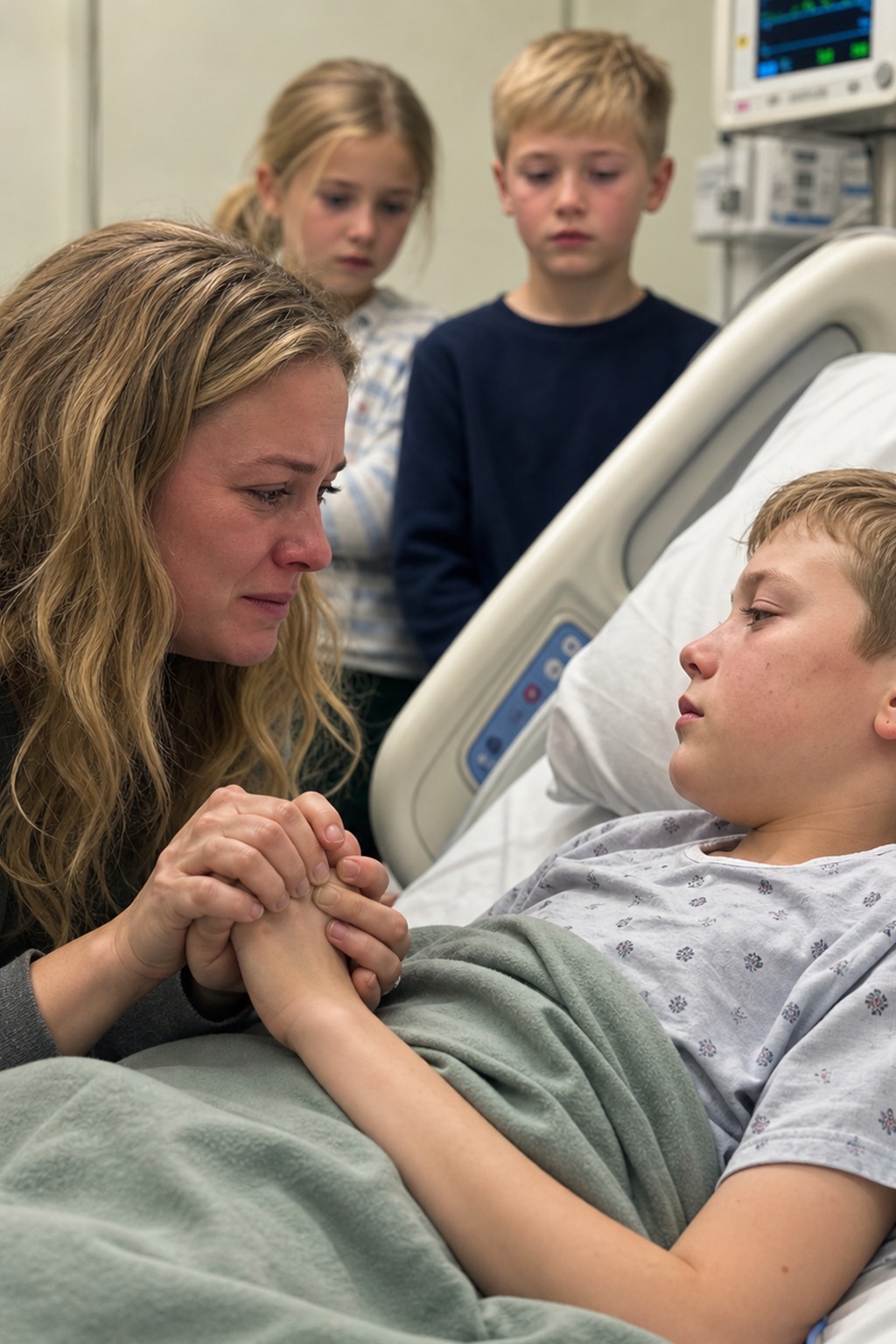
But then I would remember the ICU.
I would remember that hard chair under me at 2:00 a.m. while Ethan’s fever climbed.
I would remember my son’s small hand in mine, his face gray with pain, his whispered “Don’t go.”
I would remember the waiting room full of other people’s families.
And then I would remember Lauren’s text.
Have plans.
No. I was not too harsh.
Consequences are not cruelty when they simply reveal the reality someone else preferred not to see.
Six months after Ethan’s surgery, my mother called again.
This time her voice was different. Not frantic. Not demanding. Careful.
“How are you?” she asked first.
It startled me. Not because it was such a rare question from her in theory, but because it was the first time in a long time that it sounded unconnected to what she needed next.
“We’re okay,” I said.
“How’s Ethan healing?”
“Good. He’s back to normal.”
A pause. Then, “Would you and Ethan like to come for Sunday dinner?”
I stood at the kitchen counter with the phone in my hand and looked out the window at Ethan in the yard, kicking a soccer ball against the fence, his movements strong and easy again.
Once, that invitation would have activated habit in me. I would have measured whether I was being too sensitive, whether I owed reconciliation another chance, whether family dinner could smooth over what words could not. I would have wanted to restore the shape of things, even at my own expense.
But some memories cannot be set neatly back on the shelf just because enough time has passed for other people’s discomfort to ripen into politeness.
“No,” I said quietly. “Not yet.”
My mother let out a breath that sounded almost like acceptance.
“Maybe someday,” I added, because it was the truth. I did not know what my future forgiveness would look like, only that it could not be rushed by appetite or nostalgia. “But not yet.”
After I ended the call, I stood in the kitchen a long time.
I thought about all the ways I had once defined being a good daughter, a good sister, a good person. How much of it had been built around availability. Around rescuing. Around stepping in before anyone else had to fully confront the consequences of their choices. I had believed generosity was pure no matter how unbalanced it became. I had believed sacrifice was noble even when it hollowed me out. I had believed that if I kept showing up, eventually that faithfulness would be mirrored back to me.
But being needed and being valued are not the same thing.
That was the most expensive lesson of my adult life.
People can need your money, your competence, your emotional labor, your time, your steadiness, your willingness to answer the phone at midnight, and still not value you. They can depend on the structure you provide while remaining almost indifferent to the person providing it. They can praise your generosity while quietly assuming they are entitled to its continuation. They can call you “the strong one” as a way of excusing themselves from ever having to be strong for you.
I learned that in the pediatric ICU, with my son sleeping under fluorescent lights while my phone remained silent.
I learned it in the hospital cafeteria, canceling transfers with a hand steadier than my heart.
I learned it listening to voicemail after voicemail that never once led with, How is Ethan?
I learned it in my father’s voice when he said, He’s fine now, isn’t he?
And I learned, too, something else.
Boundaries do not destroy love. They reveal it.
The relationships that survive your boundaries are the ones that had substance beyond your usefulness. The ones that collapse were never standing on love to begin with. They were standing on access.
After everything, I changed in practical ways as well as emotional ones. I reorganized my finances. Increased Ethan’s college fund contribution. Rebuilt the emergency savings I had dipped into during my unpaid leave. Booked a small weekend trip for the two of us once he was strong enough, just a cabin by a lake with board games and grilled cheese sandwiches and the kind of peace that comes when you realize you are no longer underwriting the lives of five other adults.
The most important part is just ahead — click NEXT »»
