
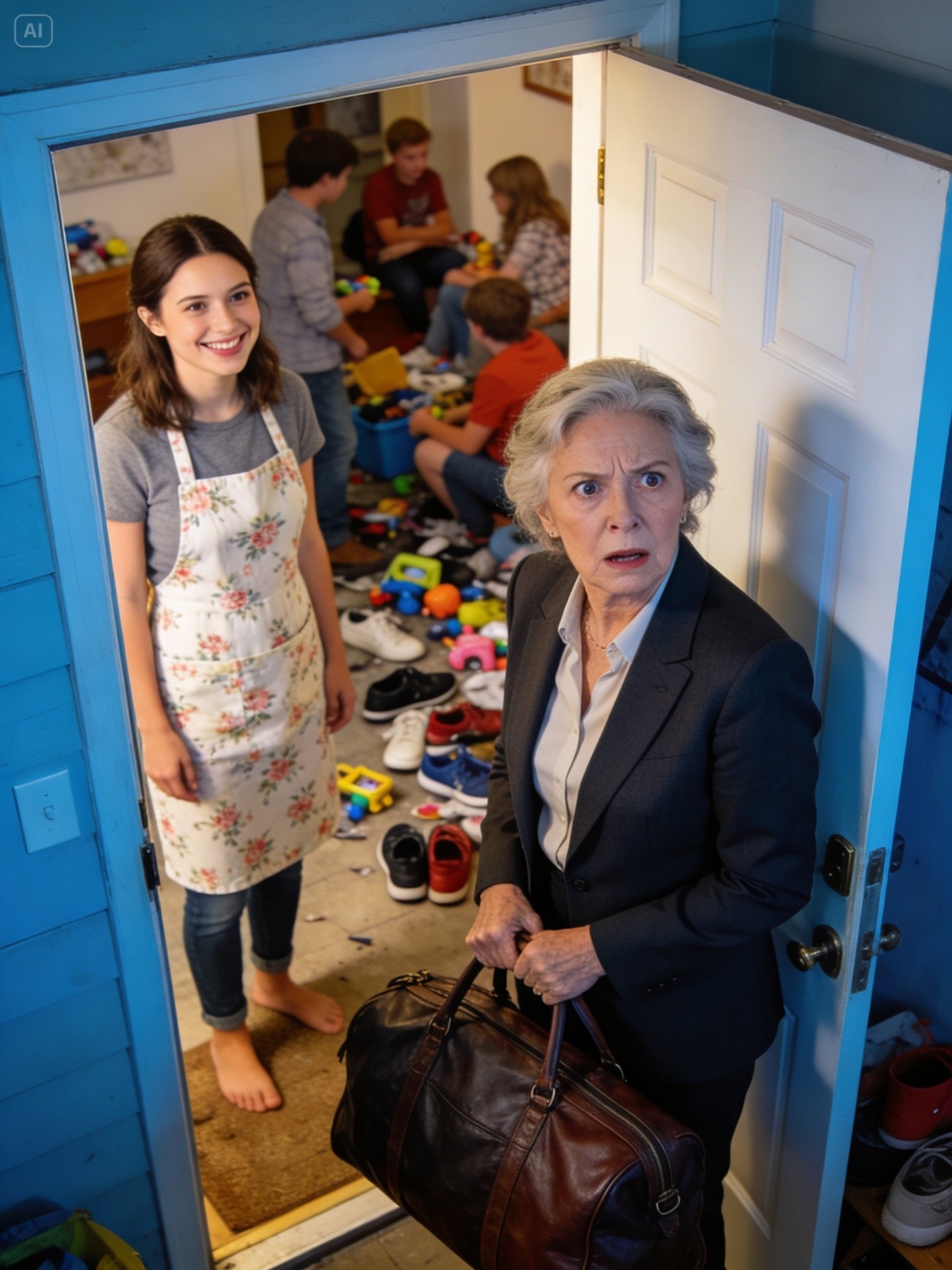
The more I thought, the less this looked like a thoughtless family overstep.
Peter knew I kept that house like a chapel.
Peter knew I never came in February unless weather forced me.
Peter knew I had texted him three days earlier saying I was arriving Friday to rest for a week after a punishing stretch of work.
He had answered with a thumbs-up.
So either he had lied to Tiffany, or Tiffany had lied to me, or both.
And if both, then why?
That question kept me awake until dawn.
The next morning I dressed carefully in dark slacks, a wool sweater, and the camel coat Winston used to say made me look like a woman who knew things. I put on lipstick though I rarely bothered with it in winter. Then I drove back to the house with my notebook in my purse and my own keys in my hand.
The street was quieter at nine in the morning. One SUV was gone. The music had stopped. Seagulls wheeled above the chimneys and the air smelled of brine and wet cedar. For one foolish second, I hoped perhaps the previous afternoon had embarrassed them enough that Tiffany and her circus had packed up overnight.
Then I saw the front porch.
My wicker chairs were pushed at odd angles against the wall, one cushion missing entirely. An empty juice box had been left on the top step. Someone had draped a child’s towel over the porch lantern. My rosemary planter lay on its side with soil scattered across the boards.
I went to the front door and put my key in the lock.
It did not fit.
Not because I was shaking.
Because the lock had been changed.
I stood there with the key in my fingers and the new brass cylinder glinting in the weak sunlight, and something inside me turned hard.
Changing the lock meant intention.
Preparation.
Permanence, or at least an attempt at it.
No one changes the lock for a casual family stay.
I stepped back without making a sound.
There was a side gate at the end of the hedge, old cedar with a latch I had installed myself years before. I still had the small skeleton key for that gate on my ring because I distrusted electronic conveniences and had never seen the point of discarding something that still worked. I slipped through the gate into the narrow path between the house and the neighbor’s fence, where the wind was quieter and the damp earth smelled of old leaves.
The kitchen window over the sink was cracked open.
Voices drifted out.
I moved closer and stood just beyond the sightline of the glass, where the porch overhang cast enough shadow to hide me.
Tiffany was in the kitchen. I knew her voice even when she lowered it into that false confidential sweetness.
“I’m telling you,” she said, “once the paperwork is filed, the rest is easy.”
Another woman answered—her mother. “And what if she fights?”
Tiffany laughed.
“Rosalind?” she said. “Please. She folds. Peter says she hates conflict more than anything.”
My hand tightened so hard around my key ring the little metal points bit into my palm.
Her mother made a doubtful sound. “She didn’t look like someone folding yesterday.”
“She left, didn’t she?”
A pause. Cabinet doors opened and closed.
Then Tiffany again, lower now, almost impatient. “By the time she realizes what’s happening, the conservatorship petition will already make her look unstable. Peter has examples. The doctor’s appointment, the confusion with the pharmacy, that time she forgot her charger and drove back to Philly without it. We don’t need much. Just enough to say she’s having memory problems.”
My vision narrowed so suddenly I had to brace one hand against the shingles beside me.
Conservatorship.
Her mother sucked in a breath. “That sounds extreme.”
“It sounds necessary,” Tiffany snapped. “The house is worth almost triple what she paid. And Peter can’t keep cleaning up this mess forever.”
“What if she says the signature is fake?”
“It won’t matter if a judge thinks she’s slipping.”
Something scraped across the counter. Paper.
Then Tiffany said, in the same bright voice she used in stores and restaurants when pretending to be charming, “Besides, once the sale goes through, we can put her somewhere lovely. She’ll have a little room, meals, people her own age. She should be grateful.”
I don’t remember breathing.
I remember the cold siding under my fingers.
I remember the taste of metal in my mouth.
I remember the sound of a spoon clinking against a mug inside my own kitchen while they discussed filing me away like inconvenient furniture.
Conservatorship.
Sale.
Somewhere lovely.
I had not just been pushed out for a vacation. They were trying to take the house, and if necessary, take my competence with it.
I heard a printer whir from the small desk nook off the kitchen—the built-in workstation where I paid tax bills and wrote Christmas cards and kept tide tables in summer.
Tiffany said, “There. That’s the revised draft. Peter wants to show it to the realtor before lunch.”
Realtor.
I waited until footsteps receded toward the front room. Then I moved.
The side mudroom door had an older lock I had not replaced because almost no one knew about it and because I am, by temperament, a woman who always trusts the obscure way in. Tiffany had changed the front lock and apparently forgotten the side.
The most important part is just ahead — click NEXT »»
