
People ask whether that is forgiveness in another form.
Maybe.
Not forgiveness for Peter or Tiffany. Something larger and calmer than that. A refusal to let betrayal be the final use of a place I built from grief and labor. A decision that my little piece of air would remain air for someone, even if those someones change.
Last winter, exactly two years after that January Friday, I was standing at the front door hanging a wreath of dried sea grass and white berries when a car pulled up outside.
Peter got out.
He looked older than he had before all of it, which is to say more honest. Some faces sharpen under success. Others become real under shame. His had become real.
He did not come up the steps immediately. He stood by the gate as if waiting to see whether I would send him away from a distance.
I did not.
After a moment, he came to the bottom of the porch and stopped there.
“Hello, Mom.”
The sea wind moved between us.
“Hello, Peter.”
He looked at the house, then at me. “I wrote first. I didn’t know if you got the letter.”
“I got it.”
“I almost turned around three times on the drive.”
“I’m not surprised.”
A small sad smile touched his mouth.
He had been in therapy, the letter said. Financially ruined, yes, but working, renting a smaller place, trying to understand the rot that had let him justify what he did. The tone of the letter had been different from the others. Less pleading. More accountable. It did not ask me to soothe him. It only said he wanted, someday, if I allowed it, to speak to me on the porch of the house he had nearly taken.
That last phrase was why I had not thrown it away.
Now he stood before me with no lawyer, no Tiffany, no polished explanation.
“I don’t expect anything,” he said. “I just wanted to see you here. Safe. In your own place.”
I studied him for a long moment.
Then I stepped aside and opened the door—not wide, not dramatically, just enough.
“You may sit in the front room for fifteen minutes,” I said. “You may not speak about money. You may not speak about what you need from me. You may tell the truth. Then you will leave.”
His eyes filled instantly.
He nodded.
“Thank you.”
He entered quietly, almost reverently, as if the house itself might reject him if he moved too fast. In the front room, he paused by the window where the baby had slept that first day, looked at the chair where I used to read, and pressed his mouth into a line.
“I still hear what she said to you,” he murmured.
“So do I.”
He sat on the edge of the sofa like a man in church.
For fifteen minutes, he told the truth.
Not all of it, perhaps. Human beings rarely manage that in one sitting. But enough.
About vanity.
About debt.
About the intoxication of believing he could solve disaster cleverly instead of humbly.
About resenting my competence because it made his unraveling feel smaller.
About Tiffany’s contempt and how often he had outsourced difficult moral choices to her because she was willing to be harder than he dared.
About shame becoming secrecy becoming fraud.
About how easy it had felt, at first, to call the house an asset instead of what it really was: his mother’s sanctuary.
I listened.
When the fifteen minutes ended, I stood.
He stood too.
“I don’t forgive you yet,” I said.
“I know.”
“I may never trust you fully again.”
He swallowed. “I know.”
“But I can see that you finally understand what you did.”
He nodded once, tears sliding free.
“That matters,” I said. “It does not erase anything. But it matters.”
Then, because I am my mother’s daughter in some ways and Winston’s wife in others and entirely myself now in the ways that count most, I touched his cheek once with the back of my fingers.
He closed his eyes.
That was all.
He left.
I closed the door.
And the house remained mine.
If you had asked me, years ago, what betrayal by family would look like, I probably would have imagined raised voices and dramatic breakage, something operatic enough that no one could possibly misunderstand the victim and the aggressor.
But betrayal often arrives better dressed than that.
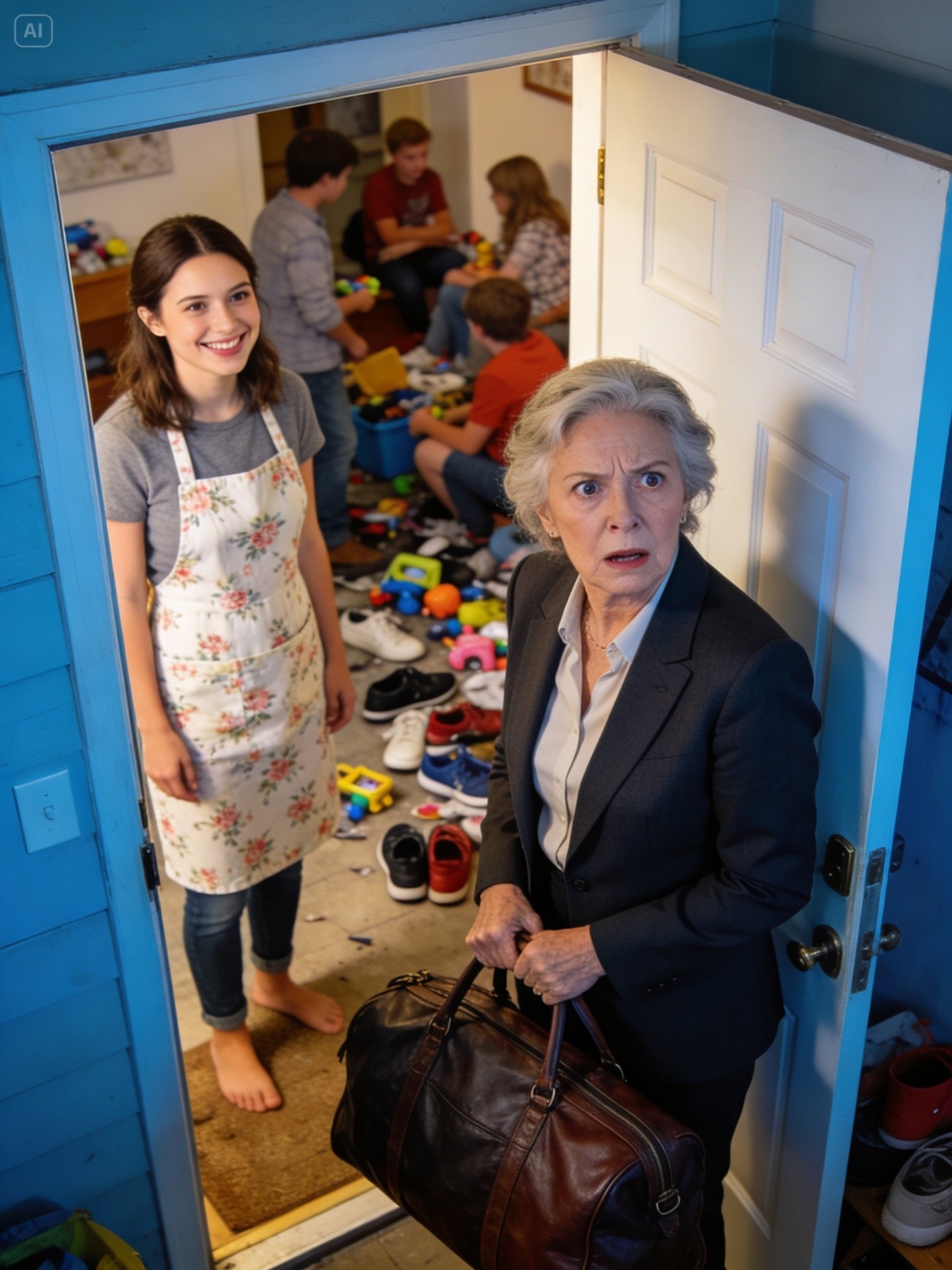
It arrives in cream sweaters at your doorway, smiling with your apron tied neatly at the waist.
It arrives through paperwork and assumptions and borrowed keys.
It arrives disguised as concern for your well-being, planning your disappearance in the language of care.
It arrives because someone decides your labor, your sacrifice, your competence, and your home are easier to convert into their rescue than to honor as yours.
The danger is not only what such betrayal takes.
It is what it tries to rewrite.
It tries to rewrite your ownership as sentiment.
Your competence as confusion.
Your patience as weakness.
Your generosity as vacancy.
Your life as available space.
What saved me was not youth or physical strength or anyone rushing in to defend me before damage was done. What saved me was older, less glamorous, and more durable.
I knew what I had built.
I knew whose name belonged on the deed.
I knew when the room had shifted from family inconvenience into predation.
And once I knew, I stopped negotiating with humiliation.
That matters.
Especially for women raised to smooth, absorb, excuse, and understand until understanding becomes the very rope used to bind them.
There is a sentence Tiffany said that afternoon at my door which I have never forgotten.
There’s no room for extra guests.
She was wrong in more ways than she ever understood.
There was no room left in that house for thieves wearing family faces.
No room in my life for pity without accountability.
No room in my old age for being managed by people who saw my hard-won refuge as their convenient solution.
And, perhaps most importantly, no room in my own mind anymore for the old lie that kindness requires surrender.
The most important part is just ahead — click NEXT »»
