
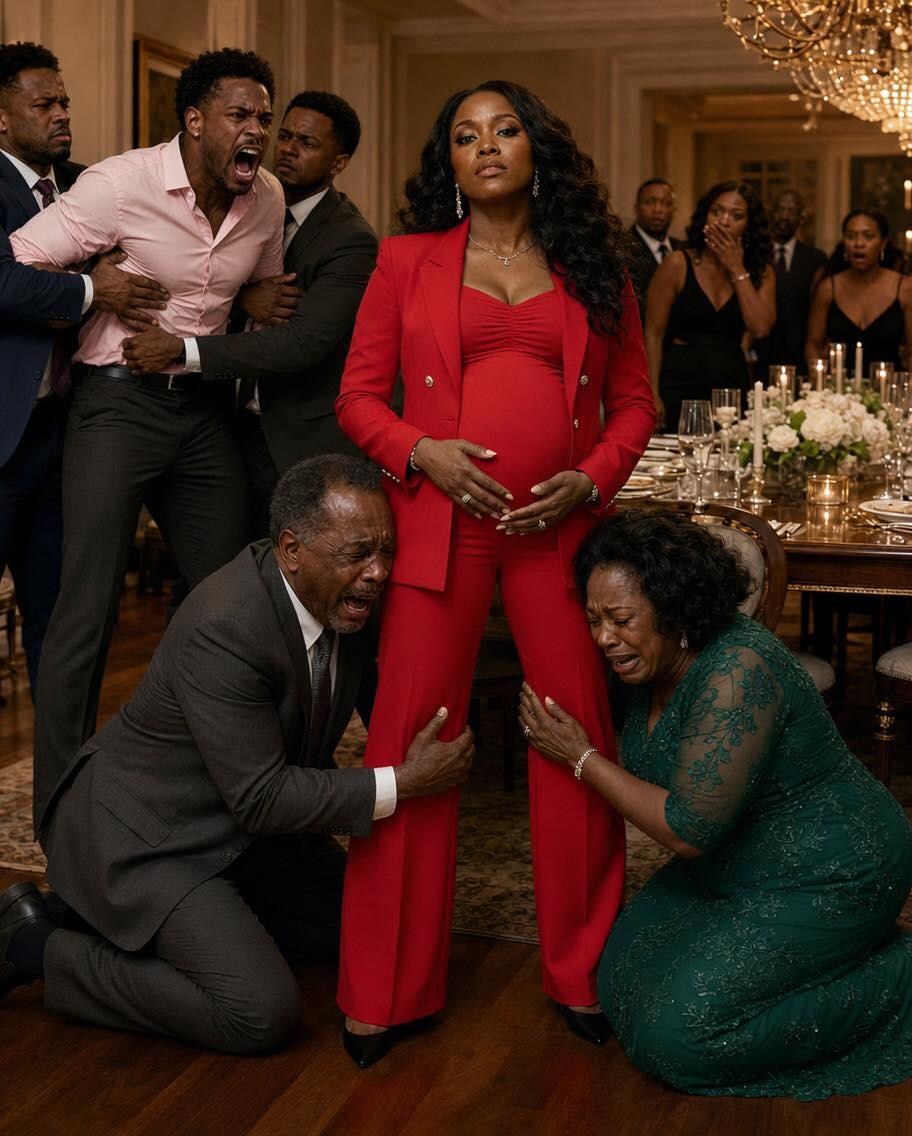
At Easter Dinner, My Mother-in-Law Had Me
At Easter dinner, my mother-in-law humiliated me.
The kitchen smelled the way it always did when I cooked for too many people: roasting meat, boiling starch, and, underneath everything else, the faint metallic edge of my own anxiety.
It was Easter Sunday. I was seven months pregnant. I had been on my feet since six in the morning, and the clock on the wall above the stove now read two forty-seven in the afternoon. My ankles had long since passed the stage of discomfort and arrived somewhere closer to a low, persistent burn that ran from my feet all the way up into my lower back. The maternity dress I had chosen that morning for its breathability was already plastered against my skin. I had tied an apron over it because Eleanor had commented, at the previous Christmas gathering, that pregnant women who cooked without aprons were inviting disaster.
I am Clara. I am thirty-two years old. And this is my house.
That last fact mattered more than it might seem. I had purchased this house outright, in cash, four years before I ever met David Vance. I had earned the money through a decade of disciplined, unglamorous work as a forensic auditor. The kitchen I was sweating in, the dining room where twenty members of David’s family were currently drinking my wine and laughing at things that had nothing to do with me, the oven I had bent my aching knees to haul a twenty-pound ham out of—all of it was mine before David was. I had never forgotten that. I had simply, over three years of marriage, allowed myself to act as though it no longer applied.
From the dining room came a burst of laughter, the kind that fills a house and makes the walls feel smaller. I set the roasting pan on the stovetop and pressed the heels of my hands against the edge of the counter for a moment. A Braxton Hicks contraction moved across my abdomen, tight and uncomfortable, my body registering stress the way it always did now, with physical punctuation.
I heard her before I saw her. The particular clank of Eleanor’s jewelry, the gold bangles she wore stacked halfway up her forearm, announced her arrival in every room she entered. She appeared in the kitchen doorway in an emerald silk blouse, wine glass in hand, her expression carrying the specific combination of boredom and contempt she reserved for spaces she considered beneath her.
“The potatoes are taking too long, Clara,” Eleanor said. She did not step into the kitchen. She stood in the doorway the way certain people do, close enough to supervise but far enough to make clear they had no intention of helping. “My family eats at four. We are not people who wait.”
I kept my eyes on the stove. “They’ll be ready.”
“Pregnancy is not an illness,” she added, swirling her wine. “Women have managed considerably more than this under considerably worse conditions.”
She left without waiting for a response. I heard her jewelry recede back toward the living room, and then her voice folded into the general noise of the gathering, pleasant and social and entirely unlike the voice she used when we were alone.
The most important part is just ahead — click NEXT »»
