
I looked through the pass-through into the living room and found David. He was at the wet bar, leaning against it with the relaxed posture of a man who has never once worried about whether dinner will be ready on time because dinner has always simply appeared. He saw me looking. He registered the sweat on my forehead, his mother retreating from the doorway, the quiet appeal in my face for some acknowledgment that what was happening in this kitchen was not nothing.
He grinned. “Listen to my mom, babe. We’re starving out here.” He turned back to his cousin.
That was the moment, though I did not fully understand it as a moment at the time. I turned back to the stove, checked the potatoes, adjusted the heat, and continued. But something in my chest had gone very quiet in a way that had nothing to do with resignation. It was more like the silence that falls after a long and complicated calculation finally reaches its answer.
I had been performing a version of this calculation for three years. Longer, if I counted the months of engagement when I had told myself that David’s passivity was a kind of gentleness, that his deference to his mother was simply the loyalty of a devoted son, that the things I found troubling would naturally resolve once we were properly settled into our life together. The arrival of a baby, I had believed, with the particular optimism of someone who wants very much to believe, would shift things. It would make him present in a way he had not yet been. It would make him protective.
He was not going to become that man. I understood this now with a completeness that surprised me by how little it hurt, as though the grieving had happened gradually, over many ordinary evenings, and I was only now catching up to what my instincts had already finished processing.
I loaded the final platter and carried dinner to the table.
✦ ✦ ✦
The table looked the way Eleanor required it to look. The good china, the silver candlesticks, the folded cloth napkins she had brought in a bag from her car because she did not trust me to fold them correctly. Twenty people settled into their seats with the comfortable noise of a family that had been gathering like this for decades and had no reason to expect that today would be any different from any other holiday.
I walked to my chair at the head of the table and sat down. The simple act of sitting was so immediately, profoundly relieving that I allowed myself a single quiet exhale before I reached for my fork. I had eaten nothing since five-thirty that morning, half a piece of toast before the cooking began. My hands were trembling slightly. The plate in front of me held mashed potatoes and gravy, and I was focused on it with the single-minded concentration of someone who had been running on adrenaline for hours and was finally in sight of the finish line.
I leaned forward and brought the fork toward my mouth.
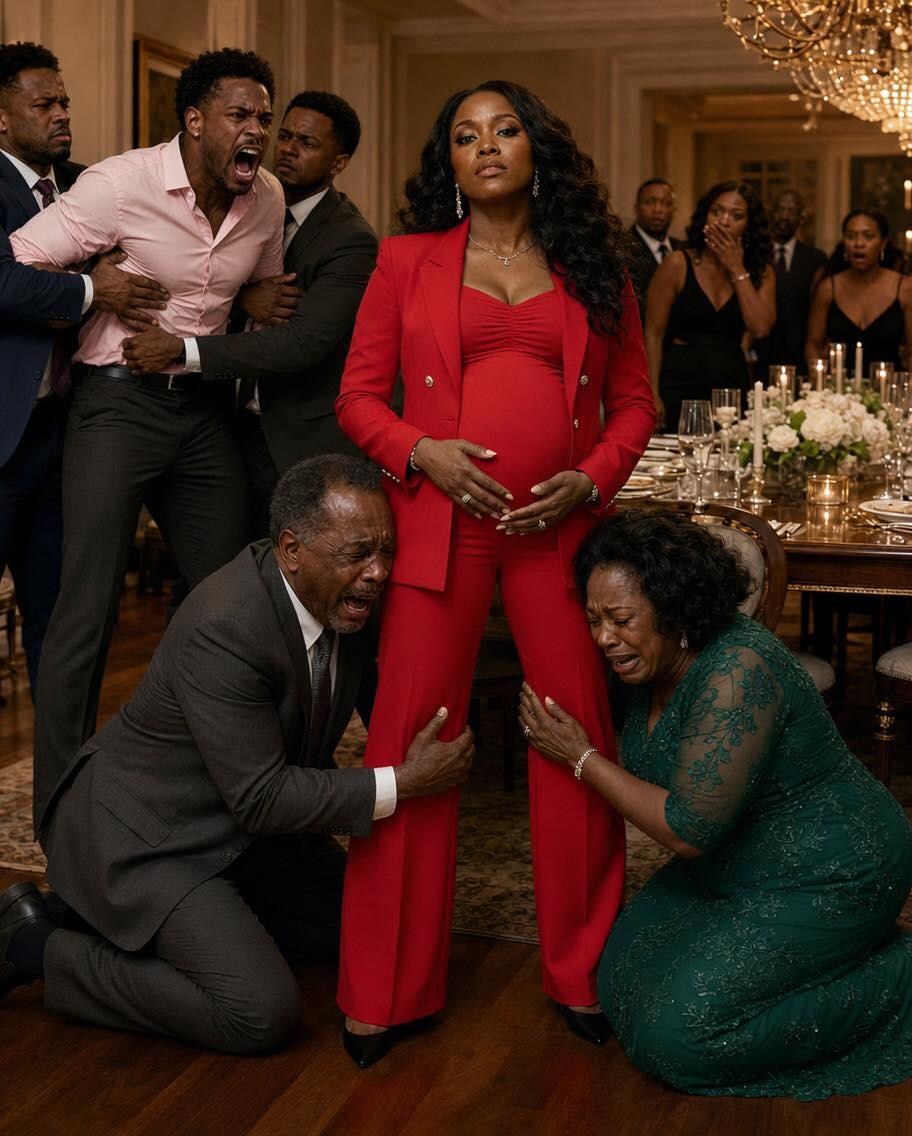
The blow came without warning. A hard, flat-palmed shove against the back of my neck, driving my face directly into the plate. The hot gravy hit my cheek first. The mashed potatoes filled my nose. For a fraction of a second, the only thing I registered was the physical shock of it, the sudden sensory overload, the adrenaline spike moving through my pregnant body in a single cold wave.
“Sit up straight!” Eleanor snapped. “You’re hunched over your food like a peasant. Show some decency at my family’s table.”
The room had gone completely silent. Twenty people with their forks suspended. The only sound was the soft, ambient tick of the grandfather clock in the hallway.
Then David laughed.
It was not an embarrassed or uncertain laugh, not the awkward laugh of a man who does not know what else to do. It was a full, genuine, delighted laugh, the laugh of someone who found the moment genuinely funny. He pointed at me. “Look at her face,” he said, addressing the table. “She looks like she fell in a mud puddle.”
A few of the relatives chuckled, nervously at first and then with more conviction as they took their cue from him.
I stayed completely still for three seconds. The gravy dripped from my chin onto the collar of my dress. I was aware of the silence beneath the laughter, the particular quality of attention in the room, twenty people watching to see what I would do.
I pushed myself upright. I picked up the cloth napkin beside my plate and wiped my face with the slow, methodical care of someone performing a task that requires precision. I set the napkin down. I did not look at Eleanor. I looked at David, at the far end of the table, and I held his gaze until the laughter in the room began to taper and the atmosphere shifted in the uncomfortable way that atmospheres shift when the person you expected to cry has not cried.
David’s smile went uncertain. He shifted in his chair.
I reached into the pocket of my apron and pressed a single pre-programmed button on my phone. I did not look away from my husband while I did it.
“They thought forcing my face into the dirt was humiliation. They didn’t understand that they were simply giving me a closer look at the ground I was already preparing to bury them under.”
—Clara
I should explain what David did not know about me.
The most important part is just ahead — click NEXT »»
