
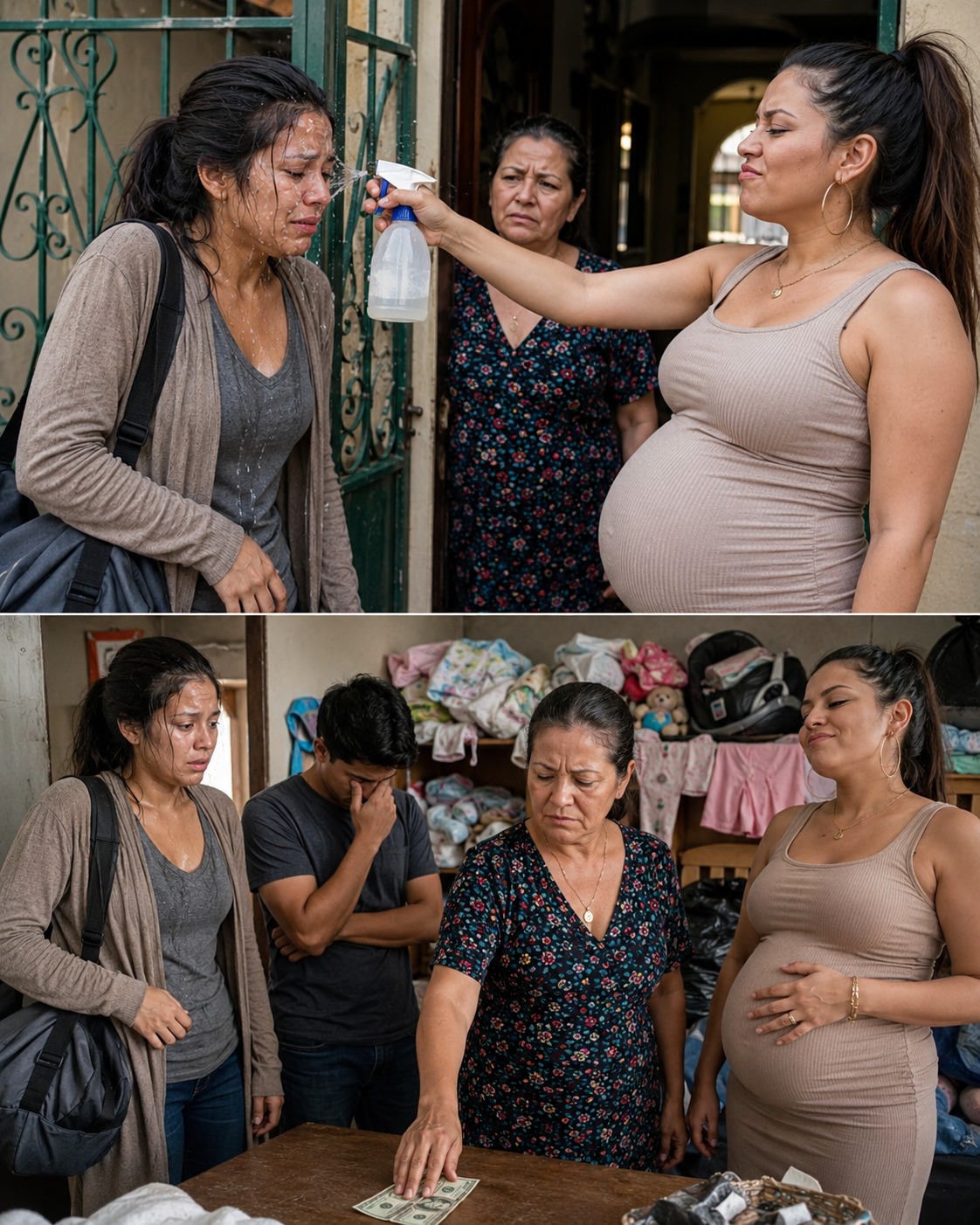
Diego cannot keep it. The transfer is voided due to fraudulent supporting statements and pending criminal findings. Your parents, under pressure from their own attorney and perhaps whatever remains of conscience, agree to place the house into a trust for sale.
After legal costs and mortgage debt, the proceeds are split.
You receive your documented contribution, plus damages from the fraudulent exclusion.
Diego receives nothing until restitution is addressed.
Your parents receive a reduced share.
Lucy screams in the courthouse hallway that you stole her baby’s future.
This time, you answer.
“No,” you say. “I stopped you from building your baby’s future on my grave.”
She raises her hand like she might slap you.
Marissa steps forward.
Lucy thinks better of it.
Diego takes a plea deal.
No long prison sentence like yours, which feels unfair until Denise reminds you that fairness is not the system’s natural language. But he gets jail time, probation, restitution, community service, and a felony record. Lucy receives probation and restitution after giving birth, plus a formal statement admitting she was in the car and lied.
Your parents avoid criminal charges by cooperating, but the public record of their sworn false statements remains.
That matters.
Truth matters even when punishment is incomplete.
The house sells in spring.
You go one last time before closing.
Not alone. Marissa comes with you, but waits on the porch.
The green door looks smaller than you remember. The living room is empty now. No dogs. No cat. No parrot. No Lucy holding her belly like a crown. No mother with alcohol spray. No father pretending the television matters. No Diego hiding from your eyes.
Your old bedroom is empty too.
The boxes are gone.
Your things are gone.
For a moment, grief rises so sharply you have to grip the doorframe.
You mourn the room as if it were a person.
Because in some ways, it was.
That room held the girl who believed family would protect her. The young woman who worked double shifts to help with mortgage payments. The sister who answered Diego’s calls at midnight. The daughter who thought being strong meant saying yes when everyone else cried.
You stand in the center of the room and whisper, “I’m sorry.”
Not to them.
To her.
Then you leave.
With your settlement money, you rent a small apartment in Long Beach. It has white walls, a balcony, and enough sunlight to make mornings less cruel. You buy a blue sofa because nobody else gets to choose beige for you anymore. You replace your books slowly, one used copy at a time.
Marissa helps you assemble furniture and complains loudly about every screw.
You laugh more than you expect.
At Second Start Legal Aid, you move from receptionist to case coordinator. You learn intake systems, court forms, housing petitions, expungement packets. You sit across from women who whisper, “It was my boyfriend’s car,” or “My family said I had to,” or “I didn’t know I could say no.”
You tell them, “Let’s write down the facts.”
You do not tell them your whole story every time.
You do not have to.
Your gentleness has edges now.
That makes it stronger.
A year after your conviction is vacated, your mother asks to meet.
You almost say no.
Then you choose a public park in Pasadena on a Saturday morning. Marissa knows where you are. Denise knows too, because you are done entering rooms unwitnessed.
Your mother arrives looking smaller. Her hair is grayer. Her hands shake around her purse strap. She does not bring food this time.
Good.
She sits beside you on the bench but leaves space between.
For a while, both of you watch a little boy chase pigeons.
Then she says, “I don’t expect forgiveness.”
You look at her.
That is new.
The most important part is just ahead — click NEXT »»
