
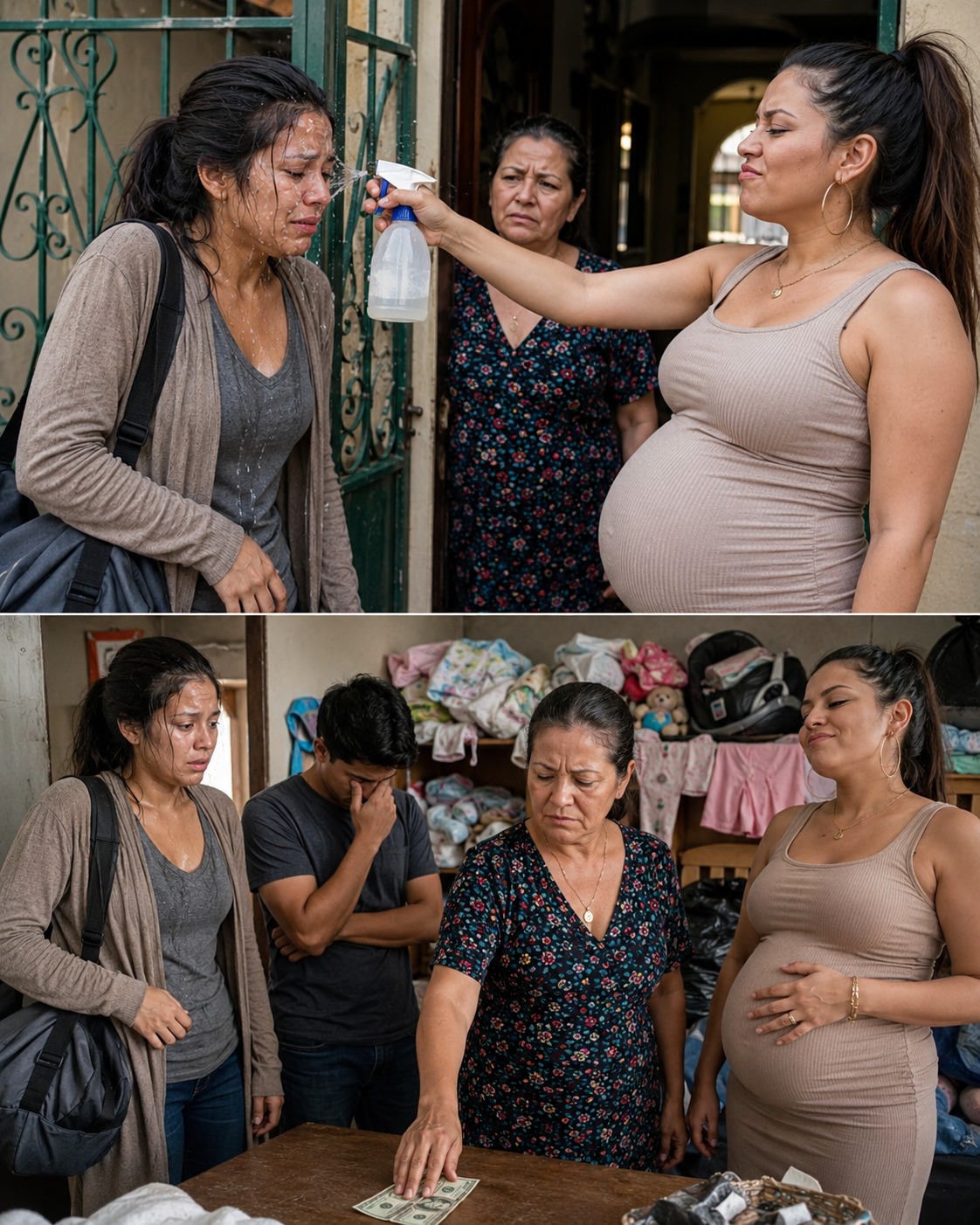
The day you receive your law school acceptance, you are standing in your kitchen eating cereal from the pot because you forgot to wash bowls. You open the email. You read it. You read it again.
Then you scream so loudly your neighbor knocks to make sure nobody has been murdered.
Marissa arrives with champagne twenty minutes later.
Denise sends flowers.
Patrice sends a text: Now go become a problem for the right people.
You do.
Years later, when you pass the bar, your mother and father attend the swearing-in ceremony. They sit in the back. They do not ask for photos until you offer. They have learned.
Diego is out by then, working quietly at a mechanic shop, sober, divorced from Lucy, paying restitution. He sends a card.
You deserved better than all of us. Congratulations, Isabel.
You put it in a drawer.
Not the evidence folder.
A different one.
That is progress.
Lucy never apologizes.
You are not surprised.
Some people can survive consequences without developing conscience.
You hear through Diego that her child, a little girl named Valentina, is healthy. That is enough. You hope the baby grows up surrounded by better truths than the ones that created her beginning.
At forty, you open your own small legal practice with Denise as your mentor and Patrice on your advisory board. Your office is not fancy. The waiting room chairs are mismatched. The coffee is better than Second Start’s but only slightly. On the wall hangs a framed sentence:
Love is not a legal defense for erasing yourself.
Clients ask about it.
You smile and say, “I learned that the hard way.”
One afternoon, after a long day in court, you drive past the old green gate in East Los Angeles.
The house has new owners now. A young family. There are potted flowers by the door, a scooter on the porch, and wind chimes hanging where your mother once kept a plastic saint.
You pull over across the street and sit for a moment.
You expect pain.
There is some.
But not the kind that owns you.
The house is no longer yours. Maybe it never was, not in the way you needed it to be. Walls cannot love you. Rooms cannot apologize. A front door cannot become a mother just because you bled your childhood into it.
You start the car.
As you drive away, your phone rings.
Marissa.
“Dinner?” she asks.
“Only if there are fries.”
“Obviously.”
You laugh.
Your life is not what you imagined when you stood at the prison gate with a release packet and a heart full of hope. It is not clean. Not simple. Not untouched by loss.
But it is yours.
That is the miracle.
Your family thought you would come home grateful for scraps. They thought the word ex-convict would keep you small. They thought shame would make you easy to erase. They thought the house, the story, the money, and the future could all be transferred while you were too broken to fight.
They were wrong.
You came home and found your room full of trash.
So you built a life they could not enter without permission.
You lost two years.
You did not lose yourself.
And in the end, the daughter they sacrificed became the woman who proved the truth, took back her name, and opened doors for others who had been told they were only useful when they were silent.
You are Isabel Rivera.
Not the shame of the family.
Not the strong one they could spend.
Not the woman who went to prison for her brother.
You are the woman who came back, told the truth, and finally stopped paying for crimes that were never hers.
The most important part is just ahead — click NEXT »»
