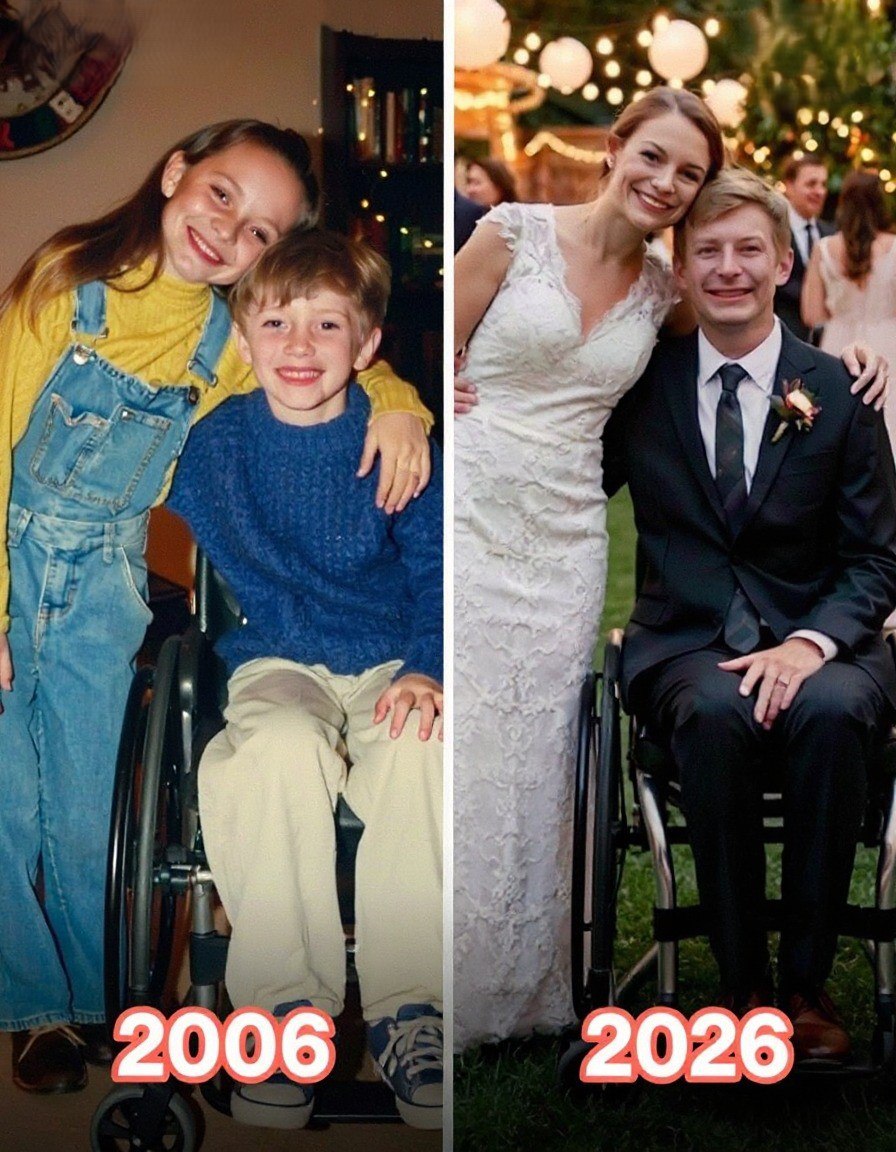
And he was in a wheelchair.
Not the sleek, modern kind you see in glossy brochures. This one was practical, a little worn, the metal dulled in places from use. The wheels had that faint squeak that became familiar later, like a small signature sound that meant he was near.
Everyone around him acted… odd.
Not cruel, exactly. Just uncertain. Like they didn’t know whether to speak louder or softer, whether to help or pretend he didn’t need it. The other kids would call out a quick “hey” from across the room and then sprint off to play tag or soccer or anything that required legs that worked without thinking.
The staff spoke about him like he wasn’t fully in the room.
“Make sure you help Noah,” they’d say, right beside him, as casually as they might assign someone to wipe tables after dinner.
Not because they meant to be unkind. But because in places like that, you can become a checklist before you become a person.
Noah sat by the window a lot.
He wasn’t staring out like he was waiting for someone to arrive. He looked like he was watching the world the way you watch a movie you’ve already seen—quiet, alert, like you’re collecting details other people miss.
One afternoon during “free time,” I had a book in my hand and a stubborn knot in my chest. The room felt too loud, too full of bodies and restless energy. I scanned for somewhere to land that wouldn’t require conversation.
And there he was, by the window, angled just so, like he’d claimed that patch of light for himself.
I walked over and dropped onto the floor near his chair. The linoleum was cold through my jeans. My book slapped lightly against my thigh.
I didn’t look up right away. I opened my book like I belonged there.
Then I said, without thinking too hard about it, “If you’re going to guard the window, you have to share the view.”
For a second there was only the distant sound of shouting from the other end of the room, and the hum of the building, and the faint squeak of his wheel as he shifted.
Then he looked down at me.
His eyebrows lifted, just slightly.
“You’re new,” he said.
His voice had that careful quality—like he weighed words before letting them go.
“More like returned,” I said, because that was what it felt like. Like I’d been dropped into a cycle and tossed back when I didn’t fit where they wanted me.
I finally glanced up.
He studied me for a beat longer than most kids did. Not suspicious exactly—just thorough.
“Claire,” I added.
He nodded once. One precise motion.
“Noah.”
That was it. No dramatic handshake. No instant best-friend montage.
To continue reading, click ‘Next’ to go to the next page.
ADVERTISEMENT
