
Chefs Have a Secret to Making Meat Incredibly Tender: Add This Before Cooking!
Introduction
Have you ever cooked a beautiful piece of meat only to end up with something tough, dry, and disappointing? The difference between restaurant-quality tenderness and a chewy disaster often comes down to a few simple chef secrets. Professional cooks don’t rely on luck—they use science, timing, and a few surprising ingredients to break down muscle fibers and lock in moisture. One of the most powerful tricks involves using common kitchen ingredients before cooking to transform even the toughest cuts into tender, juicy perfection.
Why Meat Becomes Tough
Meat turns tough when its muscle fibers tighten during cooking, especially at high heat or with improper preparation. The quality of the cut also plays a huge role, as some parts of the animal naturally contain more connective tissue. Without proper treatment, these fibers stay rigid, resulting in a chewy texture. However, with the right techniques, you can relax and break down these fibers before or during cooking, making the meat much more tender and enjoyable.
The Chef’s Secret: Tenderizing Ingredients
Baking Soda (Alkaline Magic)
A small amount of baking soda helps raise the pH of the meat’s surface, which prevents proteins from bonding too tightly. This results in softer, more tender meat after cooking. It is especially effective for quick-cooking cuts like stir-fry beef or chicken strips.
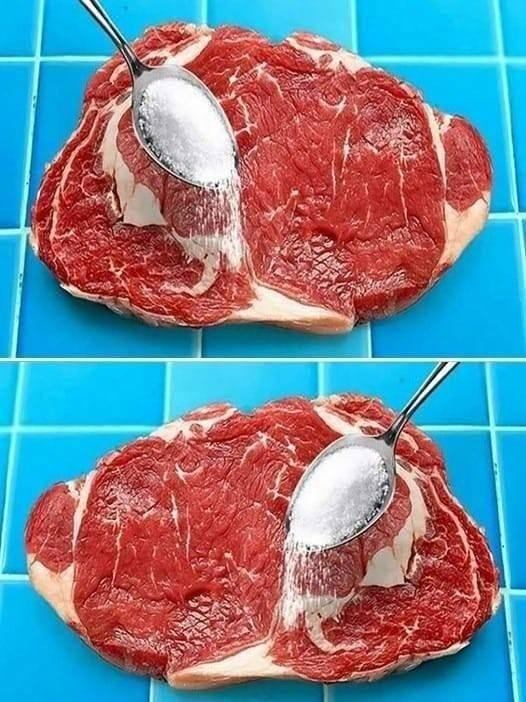
Salt (Dry Brining Power)
Coarse salt draws out moisture at first, then allows it to be reabsorbed along with seasoning. This process helps break down muscle fibers and improves both tenderness and flavor.
Honey (Natural Softener)
Honey gently penetrates the meat fibers and helps retain moisture during cooking. It also adds a subtle caramelized flavor when exposed to heat.
Acidic Marinades for Tender Meat
Lemon, Vinegar, and Wine
Acidic ingredients like lemon juice, red wine vinegar, or apple cider vinegar help relax muscle fibers by breaking down tough structures in the meat. These marinades are best used for 3 to 6 hours depending on the cut.
Fruit Enzymes
Fruits like pineapple, papaya, and even tomato contain natural enzymes that soften meat effectively. These enzymes work quickly, so they should be used carefully to avoid over-tenderizing.
Dairy-Based Marinades
Milk, yogurt, and cream contain lactic acids that gently tenderize meat while adding richness. These are especially effective for chicken and tougher cuts of beef or lamb. Marinating overnight in dairy produces exceptionally soft results.
Mechanical Tenderizing Methods
Meat Hammer Technique
Physically pounding meat helps break down tough muscle fibers. This can be done with a meat mallet or even by wrapping the meat and gently hitting it with a rolling pin. The goal is to soften the structure without tearing the meat apart.
Slow Cooking: The Natural Tenderizer
Slow cooking is one of the most reliable methods for achieving tender meat. Cooking at low temperatures over a long period allows connective tissues to break down naturally. Dishes like stews, pot-au-feu, or beef bourguignon become rich and tender thanks to this slow transformation. Adding acidic ingredients like tomato sauce or a pinch of baking soda can enhance this process even further.
Step-by-Step Chef Method for Tender Meat
The most important part is just ahead — click NEXT »»
